2026 Gratitude Journal for Kids: A Strategic Tool for Growth and Mindfulness
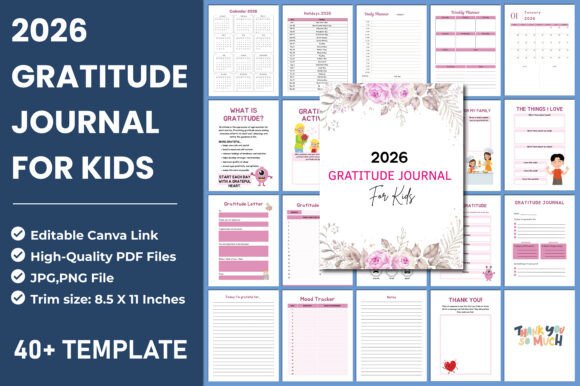
The 2026 Gratitude Journal for Kids is more than just a simple notebook—it's a powerful resource designed to help children develop mindfulness, emotional intelligence, and positive habits. This editable Canva template offers a structured yet flexible approach to journaling that can be tailored to individual needs, making it an ideal tool for educators, parents, and creators looking to support child development in a meaningful way.
What Is the 2026 Gratitude Journal for Kids?
The 2026 Gratitude Journal for Kids is a comprehensive resource that includes daily, weekly, and monthly planning sections, along with dedicated pages for gratitude activities. It features unique prompts such as “Grateful For Nature,” “Grateful For My Family,” and “Grateful For My Friends,” which encourage kids to reflect on the positive aspects of their lives. The journal also includes sections for tracking moods, writing thank-you notes, and exploring feelings of gratitude through creative exercises.
With its clean layout and user-friendly design, the 2026 Gratitude Journal for Kids is perfect for both personal use and classroom settings. It comes in high-quality JPG, PNG, and PDF formats, ready for instant download, ensuring that users can start using it immediately without any additional setup.
Why Use the 2026 Gratitude Journal for Kids Strategically?
While journaling might seem like a simple activity, it has significant strategic value when used intentionally. The 2026 Gratitude Journal for Kids provides a framework that supports goal setting, habit formation, and emotional regulation—key components of long-term success and well-being.
For example, by encouraging children to write about things they are grateful for each day, the journal helps them build a mindset of appreciation. This practice not only improves mood but also enhances focus and resilience. Over time, this can translate into better decision-making and more positive interactions with others.
Moreover, the journal’s integration of daily, weekly, and monthly planning sections allows users to align their gratitude practices with broader life goals. Whether it’s improving academic performance, fostering stronger family relationships, or developing self-awareness, the 2026 Gratitude Journal for Kids serves as a versatile tool that can be adapted to various contexts.
How to Approach the 2026 Gratitude Journal for Kids Effectively
To maximize the benefits of the 2026 Gratitude Journal for Kids, it’s important to approach it with intention rather than randomness. Here are some practical tips:
- Set Clear Goals: Define what you hope to achieve with the journal. Are you looking to improve emotional well-being? Encourage creativity? Build communication skills? Having clear objectives ensures that your use of the journal is purposeful.
- Establish a Routine: Consistency is key. Choose a specific time each day or week to engage with the journal. This helps build a habit and makes the practice feel natural and effortless.
- Customize the Content: The 2026 Gratitude Journal for Kids is fully editable, so tailor the prompts and activities to suit your child’s interests and developmental stage. This increases engagement and relevance.
- Encourage Reflection: After completing a page, take time to reflect on what was written. Ask questions like, “What did I learn today?” or “How can I apply this to my life?”
- Use It as a Learning Tool: Incorporate the journal into lessons on empathy, kindness, and self-awareness. This reinforces the educational value of the activity while making it more engaging.
When to Use the 2026 Gratitude Journal for Kids
The 2026 Gratitude Journal for Kids is particularly useful during times of transition, stress, or reflection. For instance:
- At the Start of the School Year: Help children adjust to new routines and environments by focusing on positive experiences and building confidence.
- During Challenging Times: Use the journal as a coping mechanism to process emotions and find moments of gratitude even in difficult situations.
- Before Major Life Events: Encourage reflection and preparation by helping children identify what they are grateful for and what they hope to achieve.
- As a Weekly Practice: Integrate the journal into a regular routine to foster consistency and long-term growth.
Strategic Observations and Decision-Making Guidance
Using the 2026 Gratitude Journal for Kids effectively requires thoughtful consideration of context and purpose. While the journal itself is a valuable tool, its impact depends on how it is applied. For example:
For Educators: The journal can be used to teach social-emotional learning (SEL) concepts, helping students develop skills such as empathy, self-regulation, and problem-solving. Integrating the journal into lesson plans can enhance student engagement and promote a positive classroom environment.
For Parents: Using the journal at home can strengthen family bonds and encourage open communication. By sharing their reflections, children learn to express their thoughts and feelings in a safe and supportive space.
For Creators and Marketers: The 2026 Gratitude Journal for Kids can serve as a branding tool, showcasing a commitment to child development and education. It can be used in marketing campaigns, workshops, or online courses to connect with a wider audience.
Risks of Using the Journal Without Clear Context
While the 2026 Gratitude Journal for Kids is a powerful resource, it’s important to recognize that its effectiveness depends on proper usage. Without clear goals or context, the journal may not yield the desired outcomes. For example:
- Lack of Structure: If used without a consistent routine, the journal may become a one-time activity rather than a meaningful practice.
- Missed Opportunities: Failing to customize the content may lead to disengagement, especially if the prompts don’t resonate with the child’s interests or experiences.
- Overlooking Emotional Needs: The journal should complement, not replace, professional guidance. In cases of emotional distress, it’s important to seek additional support from qualified professionals.
Maximizing Long-Term Value
The true value of the 2026 Gratitude Journal for Kids lies in its ability to support long-term growth and development. By consistently engaging with the journal, children can cultivate a mindset of gratitude that extends beyond the pages and into their daily lives.
This mindset can have lasting effects on decision-making, communication, and overall well-being. For instance, a child who regularly reflects on what they are grateful for may become more empathetic, resilient, and focused on positive outcomes. These qualities are essential for success in both personal and professional settings.
Additionally, the journal’s planning sections provide a foundation for goal-setting and time management. By integrating gratitude with planning, users can create a balanced approach to life that prioritizes both productivity and well-being.
Conclusion
The 2026 Gratitude Journal for Kids is more than a tool—it’s a strategy for growth, mindfulness, and intentional living. With its structured format, customizable design, and focus on gratitude, it offers a unique opportunity to support children in developing essential life skills.
Whether used by educators, parents, or creators, the 2026 Gratitude Journal for Kids can be a valuable asset in promoting emotional intelligence, creativity, and long-term success. By approaching it with intention and purpose, users can unlock its full potential and make a meaningful impact on the lives of children.